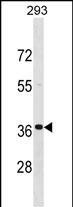
Troponin T, fast skeletal muscle, TnTf, Beta-TnTF, Fast skeletal muscle troponin T, fTnT, TNNT3
The binding of Ca(2+) to the trimeric troponin complex initiates the process of muscle contraction. Increased Ca(2+) concentrations produce a conformational change in the troponin complex that is transmitted to tropomyosin dimers situated along actin filaments. The altered conformation permits increased interaction between a myosin head and an actin filament which, ultimately, produces a muscle contraction. The troponin complex has protein subunits C, I, and T. Subunit C binds Ca(2+) and subunit I binds to actin and inhibits actin-myosin interaction. Subunit T binds the troponin complex to the tropomyosin complex and is also required for Ca(2+)-mediated activation of actomyosin ATPase activity. There are 3 different troponin T genes that encode tissue-specific isoforms of subunit T for fast skeletal-, slow skeletal-, and cardiac-muscle. This gene encodes fast skeletal troponin T protein, also known as troponin T type 3. Alternative splicing results in multiple transcript variants encoding additional distinct troponin T type 3 isoforms. A developmentally regulated switch between fetal/neonatal and adult troponin T type 3 isoforms occurs. Additional splice variants have been described but their biological validity has not been established. Mutations in this gene may cause distal arthrogryposis multiplex congenita type 2B (DA2B).
Purified polyclonal antibody supplied in PBS with 0.09% (W/V) sodium azide. This antibody is purified through a protein A column, followed by peptide affinity purification.
Target-Kategorie:
This TNNT3 antibody is generated from rabbits immunized with a KLH conjugated synthetic peptide between 217-245 amino acids from the C-terminal region of human TNNT3.
Antibody Type:
Polyclonal Antibody
* Mehrwertsteuer und Versandkosten nicht enthalten. Irrtümer und Preisänderungen vorbehalten