The antiserum was produced against synthesized peptide derived from human Tyrosine Hydroxylase around the phosphorylation site of Ser19. AA range:10-59
The protein encoded by this gene is involved in the conversion of tyrosine to dopamine. It is the rate-limiting enzyme in the synthesis of catecholamines, hence plays a key role in the physiology of adrenergic neurons. Mutations in this gene have been associated with autosomal recessive Segawa syndrome. Alternatively spliced transcript variants encoding different isoforms have been noted for this gene. [provided by RefSeq, Jul 2008],
Western Blot: 1/500 - 1/2000. Immunohistochemistry: 1/100 - 1/300. Immunofluorescence: 1/200 - 1/1000. ELISA: 1/5000. Not yet tested in other applications.
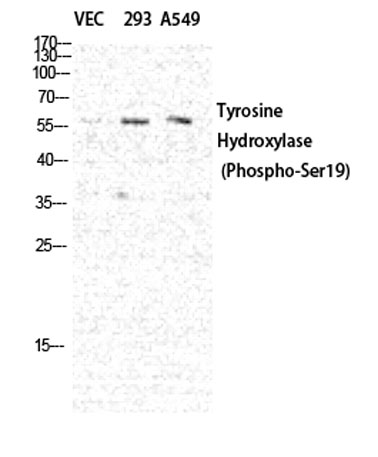
Western Blot analysis of various cells using Phospho-TH (S19) Polyclonal Antibody diluted at 1:1000
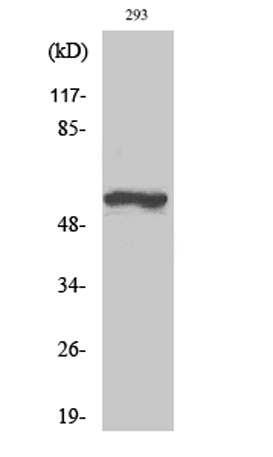
Western Blot analysis of 293 cells using Phospho-TH (S19) Polyclonal Antibody diluted at 1:1000
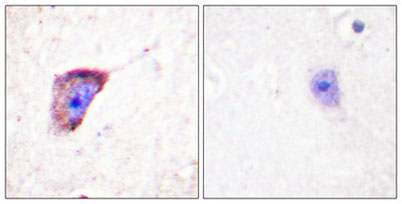
Immunohistochemical analysis of paraffin-embedded Human brain. Antibody was diluted at 1:100(4 overnight). High-pressure and temperature Tris-EDTA,pH8.0 was used for antigen retrieval. Negetive contrl (right) obtaned from antibody was pre-absorbed by immunogen peptide.
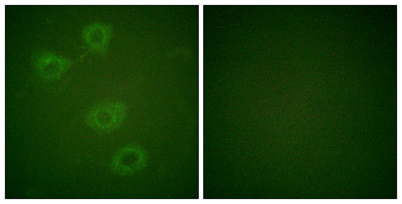
Immunofluorescence analysis of HUVEC cells, using Tyrosine Hydroxylase (Phospho-Ser19) Antibody. The picture on the right is blocked with the phospho peptide.
* Mehrwertsteuer und Versandkosten nicht enthalten. Irrtümer und Preisänderungen vorbehalten