adducin 1(ADD1) Homo sapiens Adducins are a family of cytoskeleton proteins encoded by three genes (alpha, beta, gamma). Adducin is a heterodimeric protein that consists of related subunits, which are produced from distinct genes but share a similar structure. Alpha- and beta-adducin include a protease-resistant N-terminal region and a protease-sensitive, hydrophilic C-terminal region. Alpha- and gamma-adducins are ubiquitously expressed. In contrast, beta-adducin is expressed at high levels in brain and hematopoietic tissues. Adducin binds with high affinity to Ca(2+)/calmodulin and is a substrate for protein kinases A and C. Alternative splicing results in multiple variants encoding distinct isoforms, however, not all variants have been fully described. [provided by RefSeq, Jul 2008],
Western Blot: 1/500 - 1/2000. Immunohistochemistry: 1/100 - 1/300. Immunoprecipitation: 2-5 ug/mg lysate. Immunofluorescence: 1/200 - 1/1000. ELISA: 1/40000. Not yet tested in other applications.
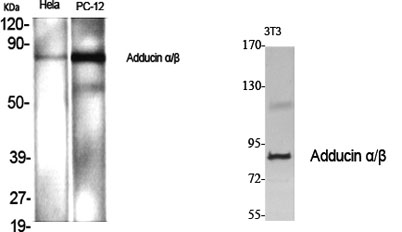
Western Blot analysis of various cells using Adducin alpha/beta Polyclonal Antibody diluted at 1:1000
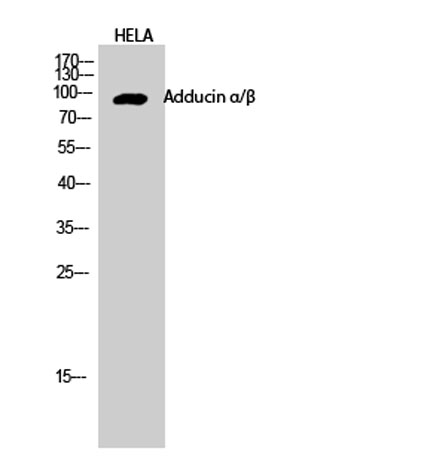
Western Blot analysis of HELA cells using Adducin alpha/beta Polyclonal Antibody diluted at 1:1000
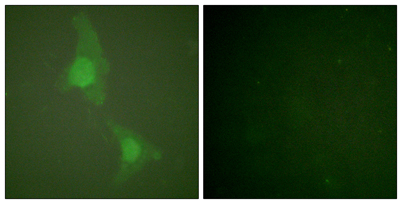
Immunofluorescence analysis of HeLa cells, using ADD1 Antibody. The picture on the right is blocked with the synthesized peptide.
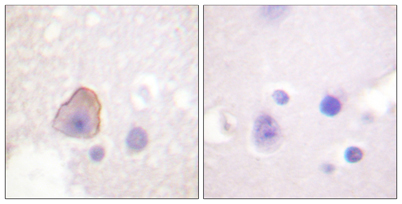
Immunohistochemistry analysis of paraffin-embedded human brain tissue, using ADD1 Antibody. The picture on the right is blocked with the synthesized peptide.
* Mehrwertsteuer und Versandkosten nicht enthalten. Irrtümer und Preisänderungen vorbehalten