The antiserum was produced against synthesized peptide derived from human Arrestin 1. AA range:369-418
Alternative Synonym:
ARRB1, ARR1, Beta-arrestin-1, Arrestin beta-1
Members of arrestin/beta-arrestin protein family are thought to participate in agonist-mediated desensitization of G-protein-coupled receptors and cause specific dampening of cellular responses to stimuli such as hormones, neurotransmitters, or sensory signals. Arrestin beta 1 is a cytosolic protein and acts as a cofactor in the beta-adrenergic receptor kinase (BARK) mediated desensitization of beta-adrenergic receptors. Besides the central nervous system, it is expressed at high levels in peripheral blood leukocytes, and thus the BARK/beta-arrestin system is believed to play a major role in regulating receptor-mediated immune functions. Alternatively spliced transcripts encoding different isoforms of arrestin beta 1 have been described. [provided by RefSeq, Jan 2011],
Western Blot: 1/500 - 1/2000. Immunohistochemistry: 1/100 - 1/300. Immunofluorescence: 1/200 - 1/1000. ELISA: 1/10000. Not yet tested in other applications.
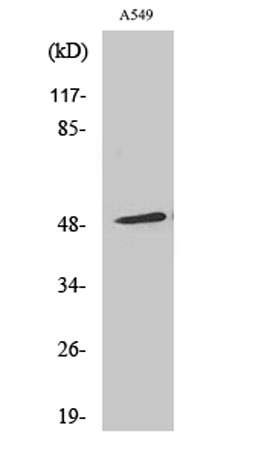
Western Blot analysis of various cells using Arrestin-beta-1 Polyclonal Antibody diluted at 1:500
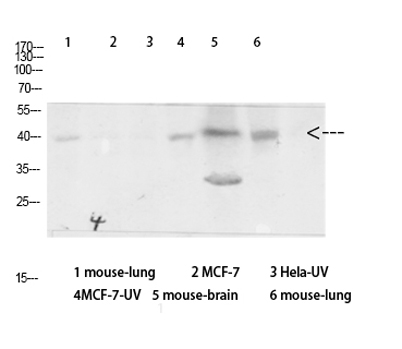
Western Blot analysis of various cells using Antibody diluted at 1:1000. Secondary antibody(catalog:RS0002) was diluted at 1:20000
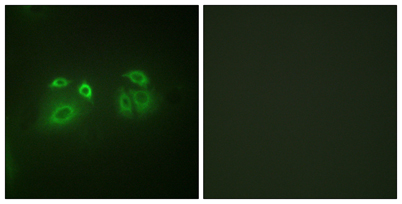
Immunofluorescence analysis of A549 cells, using Arrestin 1 Antibody. The picture on the right is blocked with the synthesized peptide.
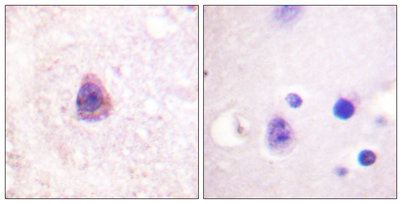
Immunohistochemistry analysis of paraffin-embedded human brain tissue, using Arrestin 1 Antibody. The picture on the right is blocked with the synthesized peptide.
* Mehrwertsteuer und Versandkosten nicht enthalten. Irrtümer und Preisänderungen vorbehalten