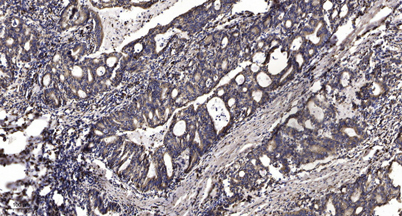
| catalytic activity:ATP + a [protein]-L-tyrosine = ADP + a [protein]-L-tyrosine phosphate.,disease:Activation of MET after rearrangement with the TPR gene produces an oncogenic protein.,disease:Defects in MET are a cause of hepatocellular carcinoma (HCC) [MIM:114550].,disease:Defects in MET are a cause of hereditary papillary renal carcinoma (HPRC) [MIM:605074], also known as papillary renal cell carcinoma 2 (RCCP2). HPRC is a form of inherited kidney cancer characterized by a predisposition to develop multiple, bilateral papillary renal tumors. The pattern of inheritance is consistent with autosomal dominant transmission with reduced penetrance.,disease:Defects in MET may be associated with gastric cancer.,disease:Genetic variations in MET may be associated with susceptibility to autism type 9 (AUTS9) [MIM:611015]. Autism is a neurodevelopmental disorder characterized by disturbance in language, perception and socialization. The disorder is classically defined by a triad of limited or absent verbal communication, a lack of reciprocal social interaction or responsiveness, and restricted, stereotypical, and ritualized patterns of interests and behavior.,domain:The kinase domain is involved in SPSB1 binding.,function:Receptor for hepatocyte growth factor and scatter factor. Has a tyrosine-protein kinase activity. Functions in cell proliferation, scattering, morphogenesis and survival.,online information:C-MET entry,similarity:Belongs to the protein kinase superfamily. Tyr protein kinase family.,similarity:Contains 1 protein kinase domain.,similarity:Contains 1 Sema domain.,similarity:Contains 3 IPT/TIG domains.,subunit:Heterodimer formed of an alpha chain (50 kDa) and a beta chain (145 kDa) which are disulfide linked. Binds PLXNB1 and GRB2. Interacts with SPSB1, SPSB2 and SPSB4 (By similarity). Interacts with INPP5D/SHIP1. When phosphorylated at Tyr-1356, interacts with INPPL1/SHIP2. Interacts with RANBP9 and RANBP10, as well as SPSB1, SPSB2, SPSB3 and SPSB4. SPSB1 binding occurs in the presence and in the absence of HGF, however HGF treatment has a positive effect on this interaction. Interacts with MUC20, prevents interaction with GRB2 and suppresses hepatocyte growth factor-induced cell proliferation., |