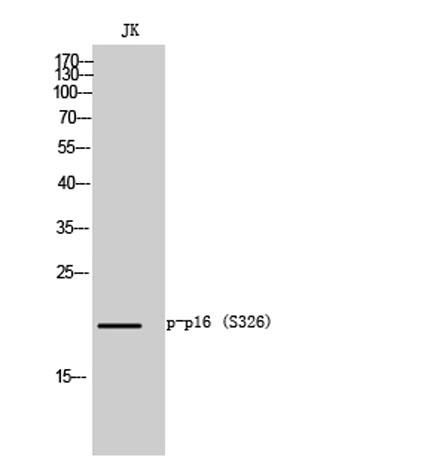
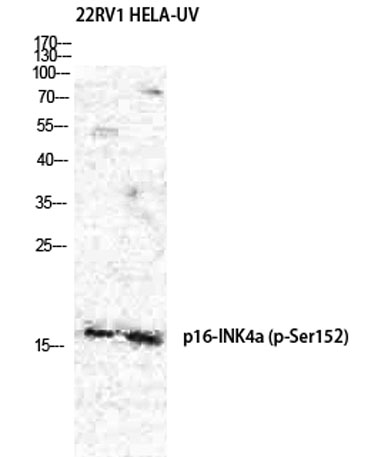
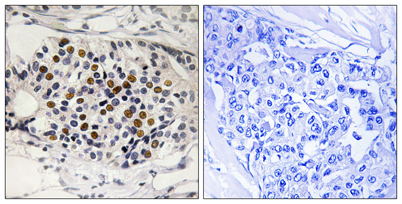
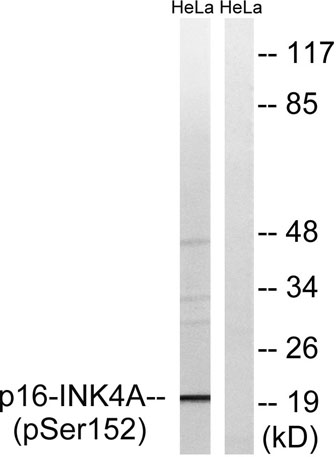
| alternative products:Isoform 1 and isoform 4 arise due to the use of two alternative first exons joined to a common exon 2 at the same acceptor site but in different reading frames, resulting in two completely different isoforms,disease:Defects in CDKN2A are a cause of Li-Fraumeni syndrome (LFS) [MIM:151623]. LFS is a highly penetrant familial cancer phenotype usually associated with inherited mutations in TP53.,disease:Defects in CDKN2A are involved in tumor formation in a wide range of tissues.,disease:Defects in CDKN2A are the cause of cutaneous malignant melanoma 2 (CMM2) [MIM:155601]. Inheritance is autosomal dominant. Malignant melanoma is a malignant neoplasm of melanocytes, arising de novo or from a preexisting benign nevus, which occurs most often in the skin but also may involve other sites.,disease:Defects in CDKN2A are the cause of familial atypical multiple mole melanoma-pancreatic carcinoma syndrome (FAMMMPC) [MIM:606719].,disease:Defects in CDKN2A are the cause of melanoma-astrocytoma syndrome [MIM:155755]. The melanoma-astrocytoma syndrome is characterized by a dual predisposition to melanoma and neural system tumors, commonly astrocytoma.,function:Acts as a negative regulator of the proliferation of normal cells by interacting strongly with CDK4 and CDK6. This inhibits their ability to interact with cyclins D and to phosphorylate the retinoblastoma protein.,function:Capable of inducing cell cycle arrest in G1 and G2 phases. Acts as a tumor suppressor. Binds to MDM2 and blocks its nucleocytoplasmic shuttling by sequestering it in the nucleolus. This inhibits the oncogenic action of MDM2 by blocking MDM2-induced degradation of p53 and enhancing p53-dependent transactivation and apoptosis. Also induces G2 arrest and apoptosis in a p53-independent manner by preventing the activation of cyclin B1/CDC2 complexes. Binds to BCL6 and down-regulates BCL6-induced transcriptional repression. Binds to E2F1 and MYC and blocks their transcriptional activator activity but has no effect on MYC transcriptional repression. Binds to TOP1/TOPOI and stimulates its activity. This complex binds to rRNA gene promoters and may play a role in rRNA transcription and/or maturation. Interacts with NPM1/B23 and promotes its polyubiquitination and degradation, thus inhibiting rRNA processing. Interacts with UBE2I/UBC9 and enhances sumoylation of a number of its binding partners including MDM2 and E2F1. Binds to HUWE1 and represses its ubiquitin ligase activity. May play a role in controlling cell proliferation and apoptosis during mammary gland development.,online information:Database of CDKN2A germline and somatic variants,online information:P16INK4a entry,polymorphism:Genetic variations in CDKN2A may underlie susceptibility to uveal melanoma [MIM:155720]. Uveal melanoma is the most common type of ocular malignant tumor, consisting of overgrowth of uveal melanocytes and often preceded by a uveal nevus.,similarity:Belongs to the CDKN2 cyclin-dependent kinase inhibitor family.,similarity:Contains 4 ANK repeats.,subunit:Does not interact with cyclins, CDC2, CDK2, CDK4, CDK5 or CDK6. Binds to BCL6, E2F1, HUWE1, MDM2, MYC, NPM1/B23, TOP1/TOPOI and UBE2I/UBC9. Interacts with TBRG1. Interacts with CDKN2AIP and E4F1.,subunit:Heterodimer with CDK4 or CDK6. Isoform 3 does not bind to CDK4.,tissue specificity:Widely expressed but not detected in brain or skeletal muscle. Isoform 3 is pancreas-specific., |