The antiserum was produced against synthesized peptide derived from human OR51A4. AA range:200-249
Alternative Synonym:
OR51A4, Olfactory receptor 51A4
Olfactory receptors interact with odorant molecules in the nose, to initiate a neuronal response that triggers the perception of a smell. The olfactory receptor proteins are members of a large family of G-protein-coupled receptors (GPCR) arising from single coding-exon genes. Olfactory receptors share a 7-transmembrane domain structure with many neurotransmitter and hormone receptors and are responsible for the recognition and G protein-mediated transduction of odorant signals. The olfactory receptor gene family is the largest in the genome. The nomenclature assigned to the olfactory receptor genes and proteins for this organism is independent of other organisms. [provided by RefSeq, Jul 2008],
Western Blot: 1/500 - 1/2000. Immunofluorescence: 1/200 - 1/1000. ELISA: 1/10000. Not yet tested in other applications.
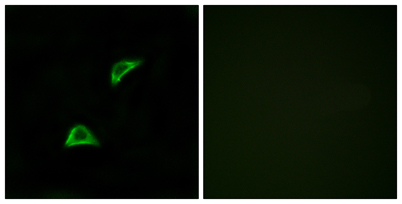
Immunofluorescence analysis of LOVO cells, using OR51A4 Antibody. The picture on the right is blocked with the synthesized peptide.
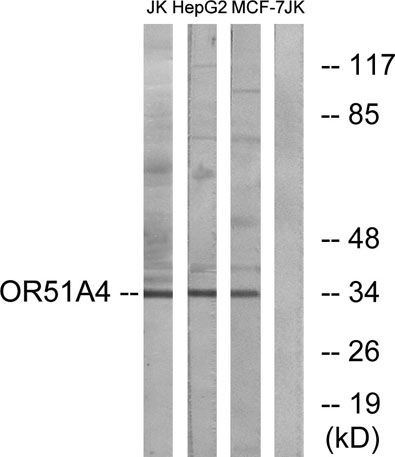
Western blot analysis of lysates from Jurkat, HepG2, and MCF-7 cells, using OR51A4 Antibody. The lane on the right is blocked with the synthesized peptide.
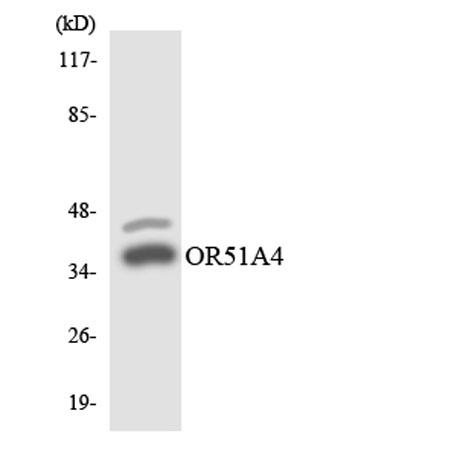
Western blot analysis of the lysates from HepG2 cells using OR51A4 antibody.
* Mehrwertsteuer und Versandkosten nicht enthalten. Irrtümer und Preisänderungen vorbehalten