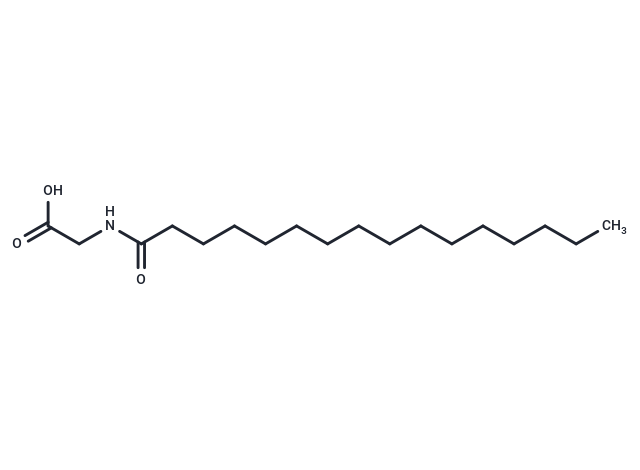
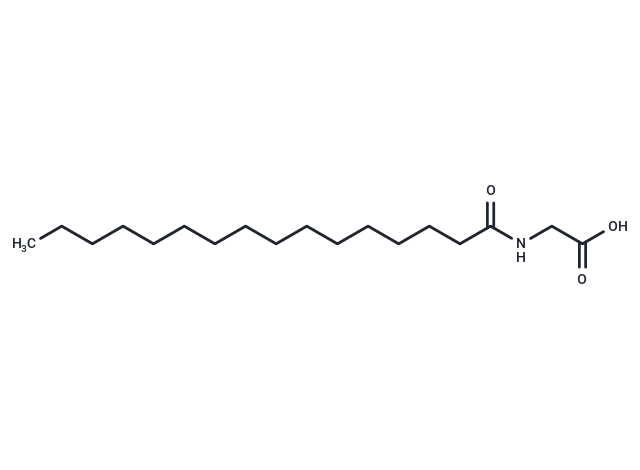
N-Palmitoyl Glycine is an endogenous lipid that modulates calcium influx and nitric oxide (NO) production in sensory neurons. It is associated with an increased risk of Brugada syndrome (BrS), interacts with BrS-related proteins, and shows moderate binding affinity to molecules including DCC, CR1, CTSB, NAAA, DEFB1, EPHA1, IGF1/IGFBP3/ALS, and LTA.
Molekulargewicht:
313.48
Reinheit:
98.00%
CAS Nummer:
[2441-41-0]
Formel:
C18H35NO3
Target-Kategorie:
NO Synthase|||Calcium Channel
T37219
T37219
* Mehrwertsteuer und Versandkosten nicht enthalten. Irrtümer und Preisänderungen vorbehalten