Caspases are a member of the cysteine-aspartic acid protease family. Caspase-3 (31 kDa) is an executionary caspase which directly cleaves and activates poly(ADP-ribose) polymerase (PARP), sterol regulatory element binding proteins (SREBPs) or it can also interact with other caspases like caspase-6, -7 and -9. Increased levels of caspase-3 are involved in Huntington Disease-associated cell death. Caspase-3 is the principal caspase in mediating the cleavage of amyloid-beta 4A precursor protein (APP), which is related with neuronal death in Alzheimers disease. Like other caspases, caspase-3 is also synthesized as a zymogen procaspase which is activated by specific proteolytic cleavage. High levels of caspase-3 are observed in lung, spleen, heart, liver and kidney, moderate levels in brain and skeletal muscle, and low in testis.
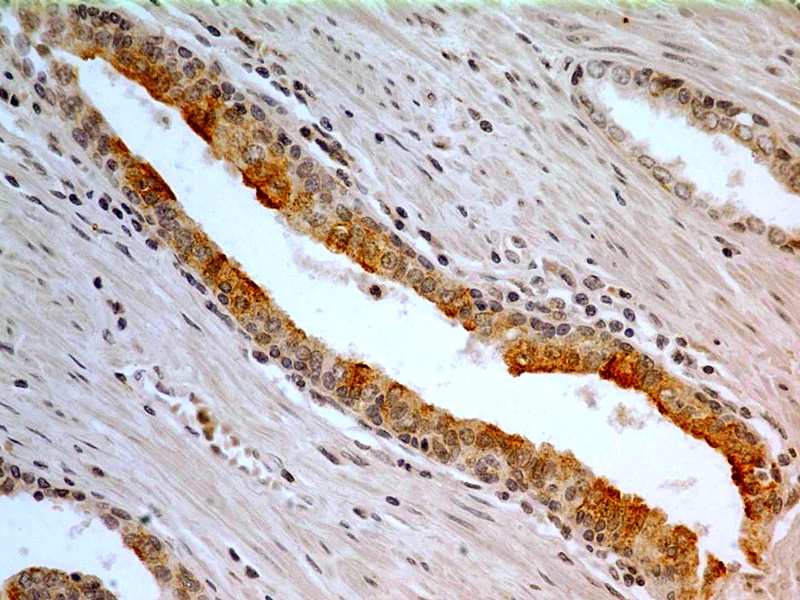
Fig-3: Immunohistochemical analysis of Caspase-3 in human Prostate using anti- Caspase-3 antibody (Clone: ABM11D3) at 5 µg/ml.
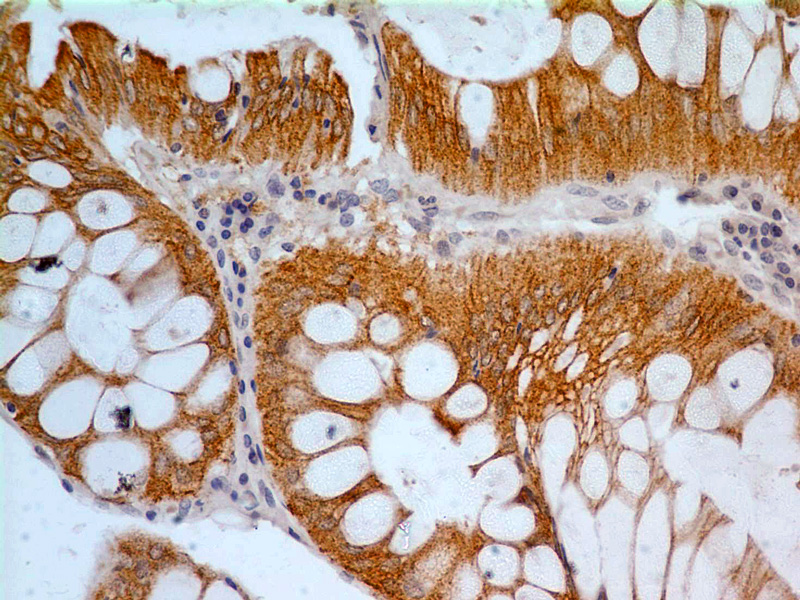
Fig-4: Immunohistochemical analysis of Caspase-3 in human Rectum using anti-Caspase-3 antibody (Clone: ABM11D3) at 5 µg/ml.
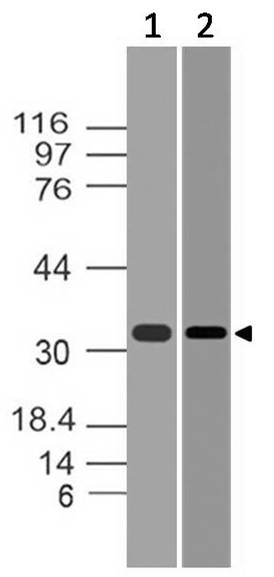
Figure-5: Western blot analysis of Caspase-3. Anti-Caspase-3 antibody (Clone: ABM11D3) was used at 2 µg/ml on (1) 3T3 and (2) EL-4 lysates.
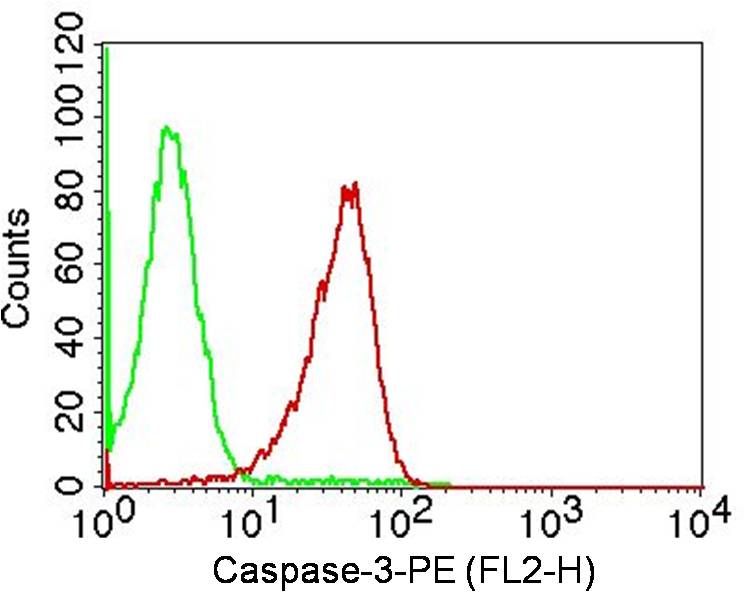
Fig. 1: Intracellular flow analysis of Caspase3 on Jurkat cells using 0.5 µg/ 10 6 cells of antibody (Clone: ABM11D3). Green represents isotype control, red represents anti-Caspase-3 antibody. Goat anti-mouse PE conjugate was used as secondary. (Cells were fixed with 4% paraformaldehyde for 10 min and washed with PBS by centrifuging at 1100 for 5 min followed by permeabilization for 20 min and washed again as mentioned above. Then cell were incubated with primary antibody for 45 min. and after
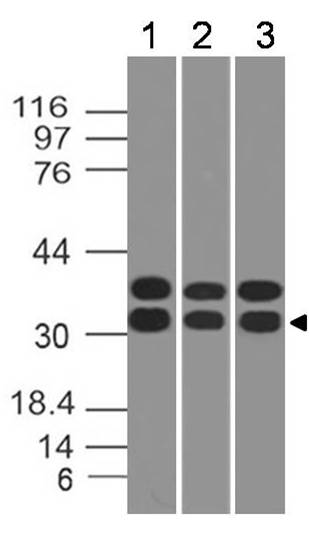
Fig. 2: Western blot analysis of Caspase-3. Anti-Caspase-3 antibody (Clone: ABM11D3) was used at 0.5 µg/ml on Jurkat, Ramos and Raji lysates.
* VAT and and shipping costs not included. Errors and price changes excepted