Apurinic/apyrimidinic (AP) sites occur frequently in DNA molecules by spontaneous hydrolysis, by DNA damaging agents or by DNA glycosylases that remove specific abnormal bases. AP sites are pre-mutagenic lesions that can prevent normal DNA replication so the cell contains systems to identify and repair such sites. Class II AP endonucleases cleave the phosphodiester backbone 5 to the AP site. This gene encodes the major AP endonuclease in human cells. Splice variants have been found for this gene, all encode the same protein. [provided by RefSeq, Jul 2008],
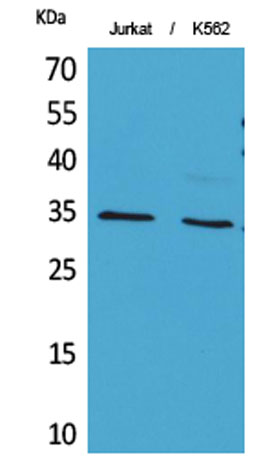
Western Blot analysis of Jurkat, K562 cells using Acetyl-Ref-1 (K7) Polyclonal Antibody. Secondary antibody(catalog:RS0002) was diluted at 1:20000
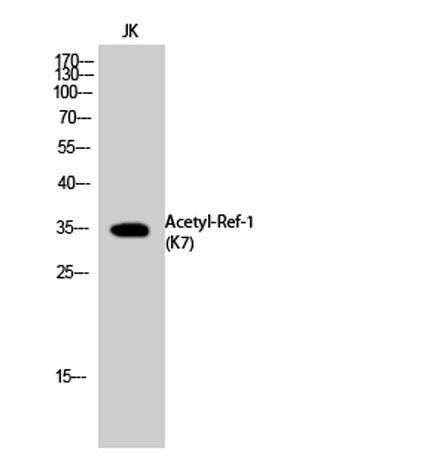
Western Blot analysis of JK cells using Acetyl-Ref-1 (K7) Polyclonal Antibody. Secondary antibody(catalog:RS0002) was diluted at 1:20000
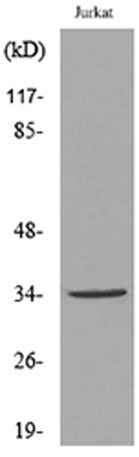
Western blot analysis of lysate from Jurkat cells, using APE1 (Acetyl-Lys7) Antibody.
Immunohistochemical analysis of paraffin-embedded human Breast cancer. 1, Antibody was diluted at 1:200(4 overnight). 2, Tris-EDTA,pH9.0 was used for antigen retrieval. 3,Secondary antibody was diluted at 1:200(room temperature, 45min).
* VAT and and shipping costs not included. Errors and price changes excepted