The protein encoded by this gene is a regulatory subunit of the AMP-activated protein kinase (AMPK). AMPK is a heterotrimer consisting of an alpha catalytic subunit, and non-catalytic beta and gamma subunits. AMPK is an important energy-sensing enzyme that monitors cellular energy status. In response to cellular metabolic stresses, AMPK is activated, and thus phosphorylates and inactivates acetyl-CoA carboxylase (ACC) and beta-hydroxy beta-methylglutaryl-CoA reductase (HMGCR), key enzymes involved in regulating de novo biosynthesis of fatty acid and cholesterol. This subunit may be a positive regulator of AMPK activity. The myristoylation and phosphorylation of this subunit have been shown to affect the enzyme activity and cellular localization of AMPK. This subunit may also serve as an adaptor molecule mediating the association of the AMPK complex. [provided
Western Blot: 1/500 - 1/2000. Immunohistochemistry: 1/100 - 1/300. ELISA: 1/40000. Not yet tested in other applications.
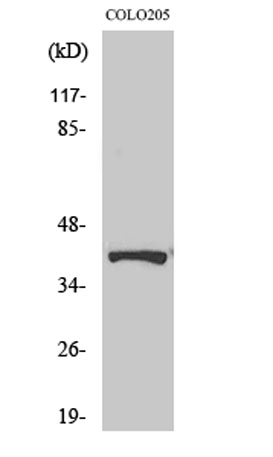
Western Blot analysis of various cells using Phospho-AMPKbeta1 (S182) Polyclonal Antibody cells nucleus extracted by Minute TM Cytoplasmic and Nuclear Fractionation kit (SC-003,Inventbiotech,MN,USA).
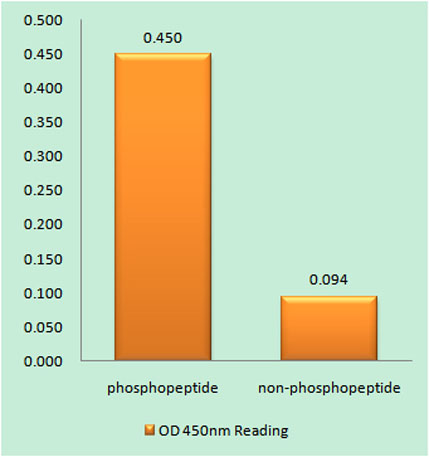
Enzyme-Linked Immunosorbent Assay (Phospho-ELISA) for Immunogen Phosphopeptide (Phospho-left) and Non-Phosphopeptide (Phospho-right), using AMPK beta1 (Phospho-Ser181) Antibody
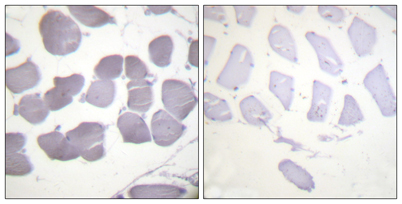
Immunohistochemistry analysis of paraffin-embedded human skeletal muscle, using AMPK beta1 (Phospho-Ser181) Antibody. The picture on the right is blocked with the phospho peptide.
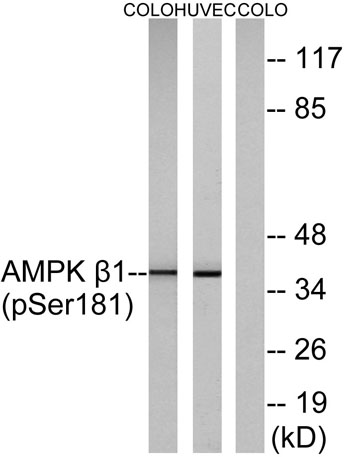
Western blot analysis of lysates from COLO205 cells and HUVEC cells, using AMPK beta1 (Phospho-Ser181) Antibody. The lane on the right is blocked with the phospho peptide.
* VAT and and shipping costs not included. Errors and price changes excepted