tumor protein p53(TP53) Homo sapiens This gene encodes a tumor suppressor protein containing transcriptional activation, DNA binding, and oligomerization domains. The encoded protein responds to diverse cellular stresses to regulate expression of target genes, thereby inducing cell cycle arrest, apoptosis, senescence, DNA repair, or changes in metabolism. Mutations in this gene are associated with a variety of human cancers, including hereditary cancers such as Li-Fraumeni syndrome. Alternative splicing of this gene and the use of alternate promoters result in multiple transcript variants and isoforms. Additional isoforms have also been shown to result from the use of alternate translation initiation codons (PMIDs: 12032546, 20937277). [provided by RefSeq, Feb 2013],
Western Blot: 1/500 - 1/2000. Immunohistochemistry: 1/100 - 1/300. Immunoprecipitation: 2-5 ug/mg lysate. ELISA: 1/10000. Not yet tested in other applications.
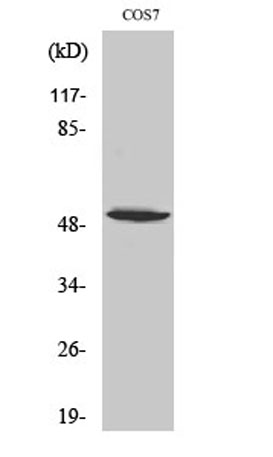
Western Blot analysis of various cells using Phospho-p53 (S6) Polyclonal Antibody diluted at 1:2000
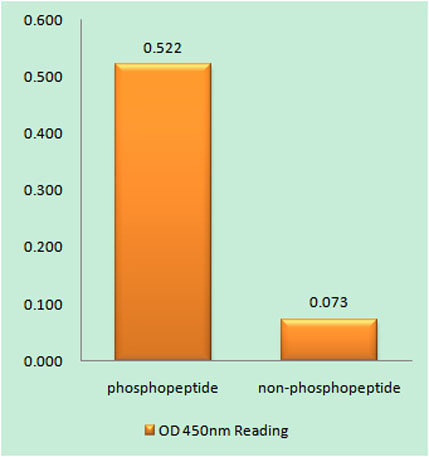
Enzyme-Linked Immunosorbent Assay (Phospho-ELISA) for Immunogen Phosphopeptide (Phospho-left) and Non-Phosphopeptide (Phospho-right), using p53 (Phospho-Ser6) Antibody
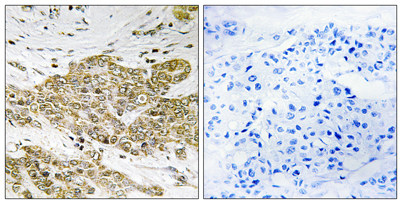
Immunohistochemistry analysis of paraffin-embedded human breast carcinoma, using p53 (Phospho-Ser6) Antibody. The picture on the right is blocked with the phospho peptide.
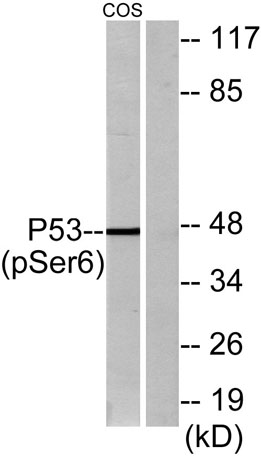
Western blot analysis of lysates from COS7 cells treated with H2O2 100uM 30, using p53 (Phospho-Ser6) Antibody. The lane on the right is blocked with the phospho peptide.
* VAT and and shipping costs not included. Errors and price changes excepted