This gene is a member of the inositol polyphosphate-5-phosphatase (INPP5) family and encodes a protein with an N-terminal SH2 domain, an inositol phosphatase domain, and two C-terminal protein interaction domains. Expression of this protein is restricted to hematopoietic cells where its movement from the cytosol to the plasma membrane is mediated by tyrosine phosphorylation. At the plasma membrane, the protein hydrolyzes the 5 phosphate from phosphatidylinositol (3,4,5)-trisphosphate and inositol-1,3,4,5-tetrakisphosphate, thereby affecting multiple signaling pathways. The protein is also partly localized to the nucleus, where it may be involved in nuclear inositol phosphate signaling processes. Overall, the protein functions as a negative regulator of myeloid cell proliferation and survival. Mutations in this gene are associated with defects and cancers of the immune system. A
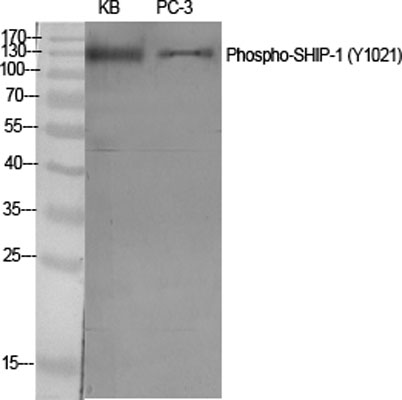
Western Blot analysis of various cells using Phospho-SHIP-1 (Y1021) Polyclonal Antibody diluted at 1:500
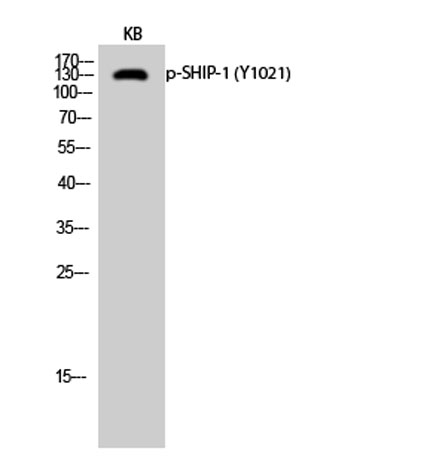
Western Blot analysis of KB cells using Phospho-SHIP-1 (Y1021) Polyclonal Antibody diluted at 1:500
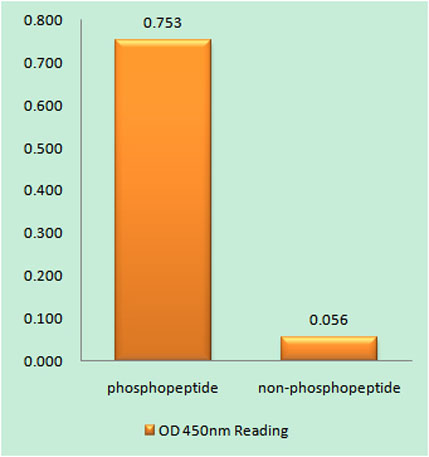
Enzyme-Linked Immunosorbent Assay (Phospho-ELISA) for Immunogen Phosphopeptide (Phospho-left) and Non-Phosphopeptide (Phospho-right), using SHIP1 (Phospho-Tyr1021) Antibody
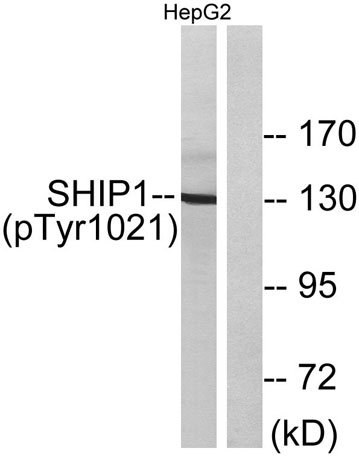
Western blot analysis of lysates from HepG2 cells treated with TNF 200NG/ML 30, using SHIP1 (Phospho-Tyr1021) Antibody. The lane on the right is blocked with the phospho peptide.
* VAT and and shipping costs not included. Errors and price changes excepted