The antiserum was produced against synthesized peptide derived from human ABCG2. AA range:289-338
Alternative Names:
ABCG2, ABCP, BCRP, BCRP1, MXR, ATP-binding cassette sub-family G member 2, Breast cancer resistance protein, CDw338, Mitoxantrone resistance-associated protein, Placenta-specific ATP-binding cassette transporter, CD antigen CD338
The membrane-associated protein encoded by this gene is included in the superfamily of ATP-binding cassette (ABC) transporters. ABC proteins transport various molecules across extra- and intra-cellular membranes. ABC genes are divided into seven distinct subfamilies (ABC1, MDR/TAP, MRP, ALD, OABP, GCN20, White). This protein is a member of the White subfamily. Alternatively referred to as a breast cancer resistance protein, this protein functions as a xenobiotic transporter which may play a major role in multi-drug resistance. It likely serves as a cellular defense mechanism in response to mitoxantrone and anthracycline exposure. Significant expression of this protein has been observed in the placenta, which may suggest a potential role for this molecule in placenta tissue. Multiple transcript variants encoding different isoforms have been found for this gene.
Western Blot: 1/500 - 1/2000. IHC-p: 1:100-300 ELISA: 1/20000. IF 1:100-300 Not yet tested in other applications.
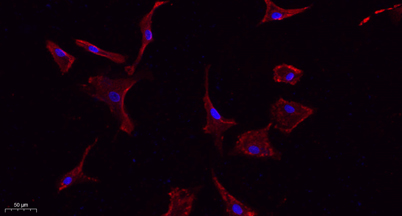
Immunofluorescence analysis of A549. 1,primary Antibody(red) was diluted at 1:200(4C overnight). 2, Goat Anti Rabbit IgG (H&L) - Alexa Fluor 594 Secondary antibody was diluted at 1:1000(room temperature, 50min).3, Picture B: DAPI(blue) 10min.
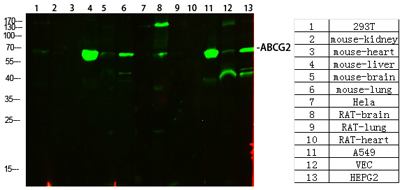
Western Blot analysis of various cells using primary antibody diluted at 1:1000(4C overnight). Secondary antibody:Goat Anti-rabbit IgG IRDye 800( diluted at 1:5000, 25C, 1 hour)
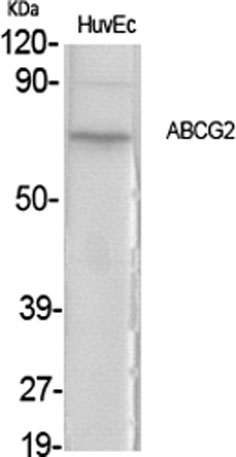
Western Blot analysis of various cells using ABCG2 Polyclonal Antibody
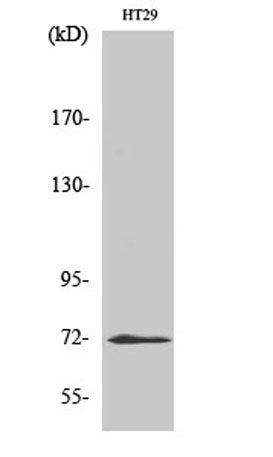
Western Blot analysis of HT29 cells using ABCG2 Polyclonal Antibody
* VAT and and shipping costs not included. Errors and price changes excepted