Cadherin-16 rabbit pAb, Rabbit, Polyclonal

Catalog Number: EBT-ES1822
Article Name: Cadherin-16 rabbit pAb, Rabbit, Polyclonal
Biozol Catalog Number: EBT-ES1822
Supplier Catalog Number: ES1822
Alternative Catalog Number: EBT-ES1822-50, EBT-ES1822-100
Manufacturer: ELK Biotechnology
Host: Rabbit
Category: Antikörper
Application: ELISA, IF, IHC, WB
Species Reactivity: Human, Mouse, Rat
Immunogen: The antiserum was produced against synthesized peptide derived from human CDH16. AA range:780-829
Alternative Names: CDH16, Cadherin-16, Kidney-specific cadherin, Ksp-cadherin
This gene is a member of the cadherin superfamily, genes encoding calcium-dependent, membrane-associated glycoproteins. Mapped to a previously identified cluster of cadherin genes on chromosome 16q22.1, the gene localizes with superfamily members CDH1, CDH3, CDH5, CDH8 and CDH11. The protein consists of an extracellular domain containing 6 cadherin domains, a transmembrane region and a truncated cytoplasmic domain but lacks the prosequence and tripeptide HAV adhesion recognition sequence typical of most classical cadherins. Expression is exclusively in kidney, where the protein functions as the principal mediator of homotypic cellular recognition, playing a role in the morphogenic direction of tissue development. Alternatively spliced transcript variants encoding distinct isoforms have been identified. [provided by RefSeq, Mar 2011],

Clonality: Polyclonal
Concentration: 1 mg/ml
Molecular Weight: 90kD
NCBI: 1014
UniProt: O75309
Application Dilute: Western Blot: 1/500 - 1/2000. Immunohistochemistry: 1/100 - 1/300. Immunofluorescence: 1/200 - 1/1000. ELISA: 1/10000. Not yet tested in other applications.
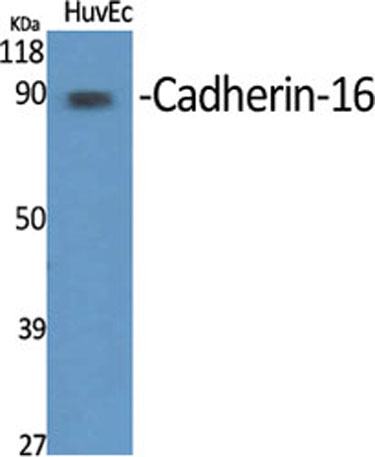
Western Blot analysis of various cells using Cadherin-16 Polyclonal Antibody diluted at 1:1000
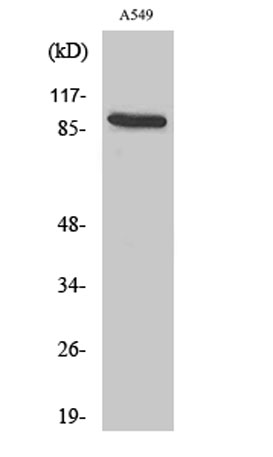
Western Blot analysis of A549 cells using Cadherin-16 Polyclonal Antibody diluted at 1:1000
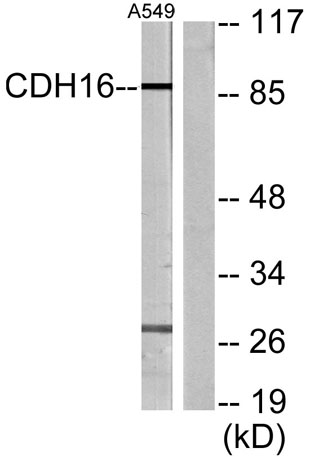
Western blot analysis of lysates from A549 cells, using CDH16 Antibody. The lane on the right is blocked with the synthesized peptide.
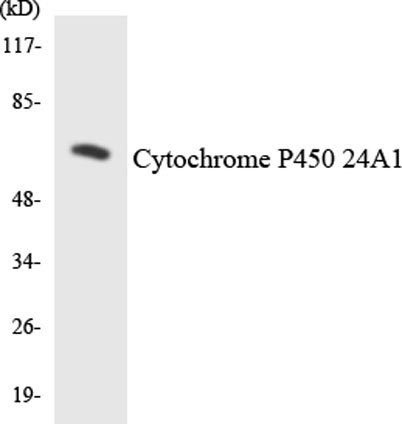
Western blot analysis of the lysates from HepG2 cells using Cytochrome P450 24A1 antibody.