The antiserum was produced against synthesized peptide derived from human CDH9. AA range:201-250
Alternative Names:
CDH9, Cadherin-9
This gene encodes a type II classical cadherin from the cadherin superfamily, integral membrane proteins that mediate calcium-dependent cell-cell adhesion. Mature cadherin proteins are composed of a large N-terminal extracellular domain, a single membrane-spanning domain, and a small, highly conserved C-terminal cytoplasmic domain. The extracellular domain consists of 5 subdomains, each containing a cadherin motif, and appears to determine the specificity of the proteins homophilic cell adhesion activity. Type II (atypical) cadherins are defined based on their lack of a HAV cell adhesion recognition sequence specific to type I cadherins. [provided by RefSeq, Jul 2008],
Western Blot: 1/500 - 1/2000. Immunohistochemistry: 1/100 - 1/300. Immunofluorescence: 1/200 - 1/1000. ELISA: 1/5000. Not yet tested in other applications.
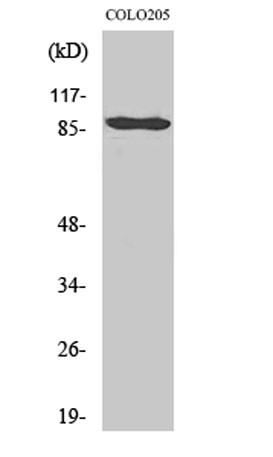
Western Blot analysis of various cells using Cadherin-9 Polyclonal Antibody
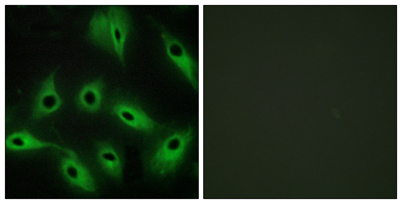
Immunofluorescence analysis of HeLa cells, using CDH9 Antibody. The picture on the right is blocked with the synthesized peptide.
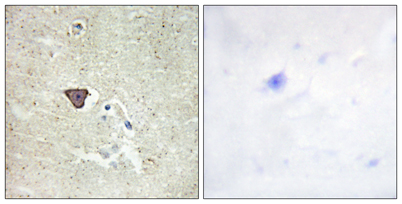
Immunohistochemistry analysis of paraffin-embedded human brain tissue, using CDH9 Antibody. The picture on the right is blocked with the synthesized peptide.
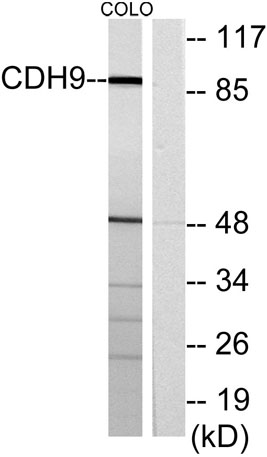
Western blot analysis of lysates from COLO cells, using CDH9 Antibody. The lane on the right is blocked with the synthesized peptide.
* VAT and and shipping costs not included. Errors and price changes excepted