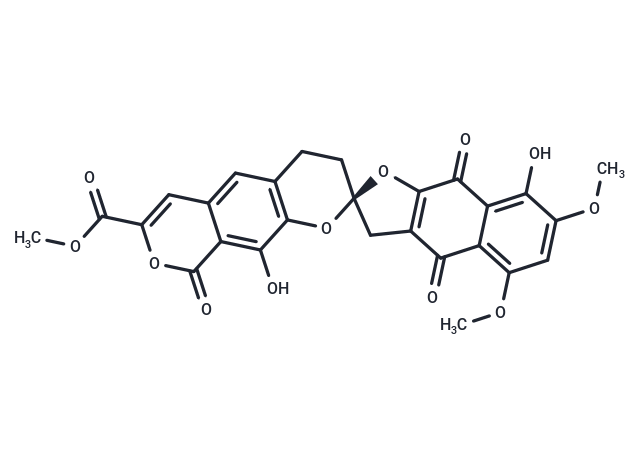
beta-Rubromycin is a bacterial metabolite originally isolated from Streptomyces that has diverse biological activities.1 It inhibits the growth of HMO2, KATO-III, and MCF-7 cells with GI50 values of 0.5, 0.84, and <0.1 µM, respectively. beta-rubromycin inhibits HIV-1 reverse transcriptase activity by 39.7% when used at a concentration of 10 µM. It also has antibacterial activity against Gram-positive bacteria. The structure of beta-rubromycin was originally described as containing an ortho-quinone group, but it was revised to a para-quinone group in 2000 using organic and biosynthetic methods, as well as spectroscopic analysis.1,2,3